Kalium channelrhodopsins in the small animal models
migrated
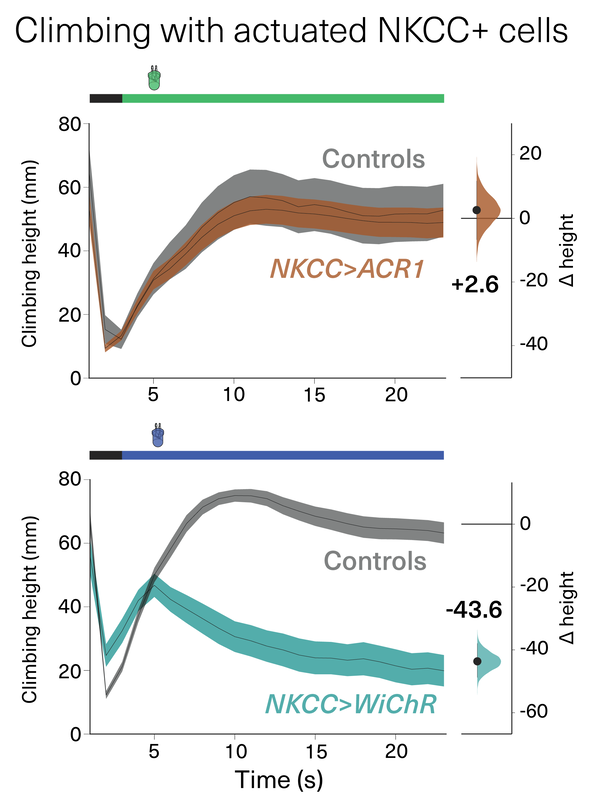
Update: Now published in Nature Communications . The Claridge-Chang lab evaluated the utility of the new kalium channelrhodopsins to suppress behavior and inhibit neural activity in Drosophila , C….
Update:Now published inNature Communications.The Claridge-Chang lab evaluated the utility of the new kalium channelrhodopsins to suppress behavior and inhibit neural activity inDrosophila,C. elegans, and zebrafish. In direct comparisons with ACR1, a variety of KCRs with enhanced plasma-membrane trafficking displayed excellent potency, and with improved properties that include reduced toxicity and superior efficacy in putative high-chloride cells.This comparative analysis of behavioral inhibition between chloride- and potassium-selective silencing tools establishes KCRs as next-generation optogenetic inhibitors forin vivocircuit analysis in behaving animals.Read morehere.